Mental Health
IV ketamine for treatment-resistant depression in Louisville: a 10-year safety record.
Written by the clinical team at Kentuckiana Integrative Medicine · Reviewed by Dr. Rafael F. Cruz, MD
Why ketamine for depression?
Standard antidepressants work on serotonin, norepinephrine, or dopamine. They can take weeks to reach effect, and published response rates for a single SSRI hover around 36%. For patients with severe, treatment-resistant depression, weeks of waiting is not a neutral cost. It is lost jobs, lost relationships, and in the worst cases, lost lives.
Ketamine operates on a different system entirely. It is an NMDA receptor antagonist that appears to rapidly increase synaptic connectivity and support neuroplasticity in regions of the brain associated with mood regulation. Ketamine is FDA-approved as an anesthetic; its use for depression, PTSD, OCD, and chronic pain is off-label. Off-label use is a common and lawful practice of medicine directed by a licensed physician. The National Institute of Mental Health has been publishing evidence since 2006 that a single sub-anesthetic dose of IV ketamine may reduce symptoms of major depression, including suicidal ideation, in some patients within hours rather than weeks. Individual results vary.
Ten years in Louisville. Zero serious adverse events.
Kentuckiana Integrative Medicine has been administering IV ketamine in the Louisville area for more than ten years. We were one of the earliest physician-led clinics in the region to offer it. Over that time, across thousands of infusions, our internal clinic records show zero serious adverse events (internal clinical observations; individual results vary). Not because ketamine is trivial, but because every infusion here is monitored by a licensed medical professional in a setting with the equipment, training, and protocols to handle anything that could come up.
This matters because the landscape has shifted. The FDA clearance of esketamine (Spravato) in 2019 brought ketamine into the mainstream, and the COVID years brought a wave of telehealth ketamine clinics mailing lozenges to homes with minimal oversight. Neither replaces a controlled, physician-monitored IV infusion in a clinical environment, and neither has the decade of safety data we carry.
The 5R Protocol
Most clinics give ketamine as a standalone infusion. We developed the 5R Protocol over a decade of iteration. Ketamine is paired with a supportive infusion that includes IV amino acids, NAD+, magnesium, and targeted nutritional cofactors. These are the raw material the brain needs to actually build on the neuroplastic window ketamine opens.
The published literature for single-agent IV ketamine reports response rates of roughly 65 to 75% in treatment-resistant depression. Our internal tracking of 5R protocol patients reports response rates of 80 to 90% (internal 5R Protocol clinic tracking; individual results vary). We are not claiming a randomized controlled trial. We are reporting what we measure in our own clinic, across a decade, in patients who have typically failed multiple prior treatments.
Who we help
Most patients arrive after years of partial responses and side effects from standard care. The conditions we commonly treat with IV ketamine and the 5R Protocol include:
- Treatment-resistant depression and major depressive disorder
- Bipolar depression
- PTSD and postpartum depression
- Active suicidal ideation (in coordination with psychiatric care)
- Obsessive-Compulsive Disorder (OCD)
- Complex Regional Pain Syndrome (CRPS)
- Fibromyalgia and chronic widespread pain
- Chronic migraine and central sensitization
- Long COVID neurological symptoms
- Patients working to reduce long-term narcotic medication use
What to expect
Every patient starts with a full consultation and medical screening. We review your history, your current medications, past trials, and the psychiatric picture in detail. Our team includes a board-certified psychiatrist, Dr. Naveen Thomas, who consults on complex mental health presentations. This is not a walk-in infusion. It is a medical decision made in partnership with you.
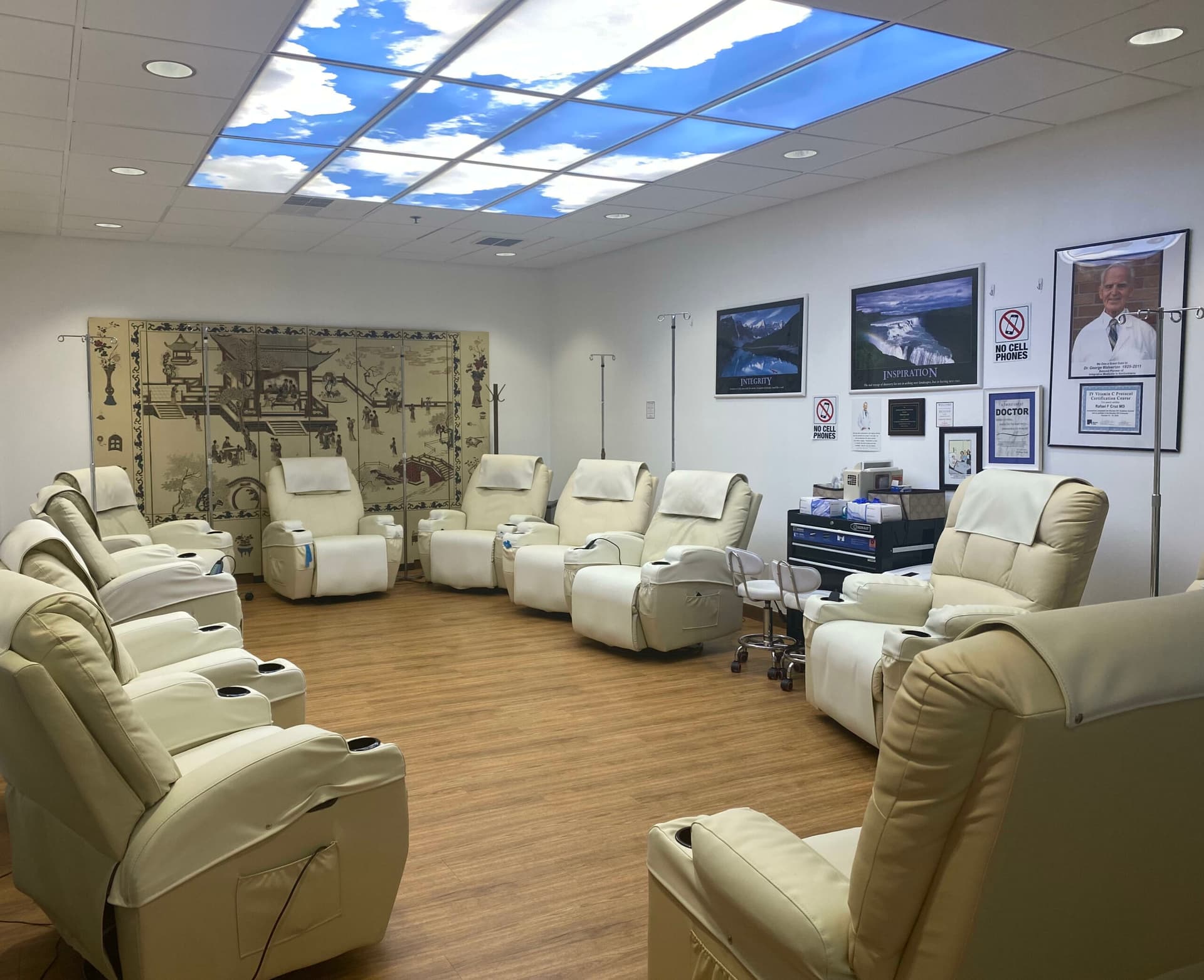
For treatment-resistant depression, the standard course is a six-session loading series delivered over two to three weeks, followed by maintenance infusions on a schedule tailored to your response. Infusions take roughly 45 minutes in a private suite. You stay until fully stable to leave with a driver. Most patients are home within an hour of the session ending.
If you, or someone you love, is not responding to conventional psychiatric care, there may be more to try. Learn more about the Kentuckiana Ketamine Institute, or request a consultation.